Huang Gongwang Retreat Walk
Huang Gongwang Hermitage gate 黄公望隐居地 → Huang Gongwang Hermitage gate 黄公望隐居地
Plan Your Route
Quick Facts
| Start | Huang Gongwang Hermitage gate 黄公望隐居地 |
| Finish | Huang Gongwang Hermitage gate 黄公望隐居地 |
| Area | Fuyang |
| Transport | From 杭州东站 take Line 4, then Line 6 to 科海路 and the 500路 to 黄公望森林公园南: 2 h 11 min and ¥10, with 1,757 m on foot, 1.6 km of it the access road up to the gate; 富阳站 is 25 minutes by car. |
| Crowd level | The gate and the 圆缘园 cluster concentrate visitors, and the memorial is the bottleneck. Beyond 百竹园 the path thins, and a weekday outside a holiday belongs to local walkers. The free opening changed the scale at the gate, not the upper valley. |
When to go
Spring, March to May, is the most comfortable: the valley is evergreen, the steps dry out, and the memorial is a dry stop in a shower. October and November give the low light and the clearest air, with the bamboo still green. Summer is shaded but humid, and the upper steps sweat, so start early. Winter is quiet, and the stone steps hold ice after a clear night. The museum is the wet-day answer, and the gate's closing time decides how far you go.
Route Summary
The 庙山坞 valley is a narrow fold of bamboo and stone steps in 富阳, on Hangzhou’s south-western edge, and it has been a destination for a long time. 黄公望 came here in his late seventies, built a hut, and spent six or seven years on a handscroll that became 《富春山居图》. The painting left; the valley stayed. What remains is a 4A scenic area with a rebuilt memorial, a free gate and a path that climbs 240 m to a rock shelter called 小洞天.
The story is bigger than the walk, and the walk is the reason to come. The memorial burned in July 2024 and reopened free in May 2025. The scroll is split between two museums, neither of them in this valley. The path itself is a working valley route: a pool, a poetry terrace, an old wharf, a bamboo garden, a last steep pitch, and a return down the same 2.7 km. It is also, for most of its length, a place where the only facilities are the ones you passed at the gate.
This page treats the walk as a walk. It starts at the gate, not at the bus stop, because the stop is 1.6 km below and the access road is its own decision. It prints the mapped line, not a round number from a visitor guide. And it keeps the painting where the painting is: in Hangzhou and Taipei, with the valley as the landscape the scroll describes.
Step-by-Step Route
The gate, 白鹤潭 and the 4A core
15 minutes, 206 mThe gate is a low building on 庙山坞东路 with a ticket window that no longer sells a ticket. Entry has been free since 31 May 2025, with no reservation, and the only paid thing on the road is the 观光车. The path leaves the gate, bends east, and passes the 白鹤潭 turn at 206 m; the pool itself sits 68 m west, a green sheet under the memorial slope, with the first toilet 13 m behind you and the second 247 m from the gate in a straight line. The 4A core is 333 ha inside a 458 ha provincial forest park, 96.5 % forest, and the pool is where that scale first makes sense. A short family version stays with the pool and the memorial: about 1.4 km there and back on the scenic paths, with the 45 m screen and a toilet at each end.
The memorial and the scroll
25 minutes, 331 mThe memorial stands 35 m west of the path at 331 m, and it is a rebuild. The previous building, a 2012 timber-framed structure, burned on 8 July 2024: the alarm at 20:24, the fire controlled at 21:36, an electrical short, no casualties, and no collection inside. It reopened on 31 May 2025, the same day the gate went free. Inside, a curved screen 45 m long and 3 m high runs a short film; the slots are half-hourly through the day and the door has the times. The painting itself is not here. 黄公望 began it at 79 and spent six or seven years on 636.9 cm of silk; it was split into 剩山图, now in the 浙江省博物馆, and 无用师卷, now in the 台北故宫, and the halves were shown together once, in 2011, in Taiwan. The Hangzhou half appears for a few weeks a year at the 之江馆.
千年诗会, 庙山古埠 and the old wharf
30 minutes, 638 mAbove the memorial the path passes 千年诗会 at 505 m, a small terrace that carries the valley's literary claim, then runs on to the old wharf at 832 m and the 观音像 at 969 m. The official 6.5 km route names the sequence 白鹤潭, 纪念馆, 千年诗会, 庙山古埠, 百竹园, 路亭茶驿, 小洞天, and it puts 白鹤潭 before the memorial, which is the order this path follows. The wharf is 40 m off the line and the statue 71 m off it; both are visible from the path but neither sits on it. The terrace is a modern marker rather than a dated stage, and the wharf's stones sit below the path beside the stream; neither is a building you can enter, and both read better as route names than as monuments. This is also where the valley begins to narrow and the bamboo closes overhead.
The upper valley and 黄公望像
40 minutes, 1,039 mThe longest open stretch runs up the valley: 1,072 m from the gate to 百竹园, 1,574 m to the insect specimen hall, 2,008 m to the painter's image. The 百竹园 toilet is the last one on the route, 39 m off the path, and after it the next 1.6 km has none. The grade is steady rather than steep, with stone steps through bamboo and one short pitch where the path turns up. Carry water from the gate: two restaurants and a shop sit at 圆缘园, but nothing in the valley sells anything, and the archive has no facility between 百竹园 and the top.
小洞天 and the return
35 minutes up, 40 back, 684 m小洞天 is the far end, 2,692 m from the gate and 22.5 m off the path at the POI, with a rest pavilion 18 m off the same point. The rock shelter is the studio the tradition attaches to the painter, with 南楼 above it and 筲箕泉 beside it; none of the three has a map point, and all three are named from the forest park's own account. The forestry bureau's 2025 仆归富春山「富」氧徒步 runs about 6.5 km from 黄公望村广场 and returns to the memorial, a different shape from this out-and-back. The park's 536.9 m high point, 如意尖, is not on this route: the gate-to-summit walk measures 18,006 m, mostly on 江滨东大道辅路 and 高尔夫路. Turn around here and re-walk the same 2,692 m down.
Getting There & Back
Metro and the 500路
BestLeave 杭州东站 on Line 4, change at the Line 6 platform for 科海路, and take the 500路 to the southern park stop. The end-to-end plan takes 7,859 seconds and costs ¥10, with 1,757 m of walking. From 滨和路 on Line 1 it is 6,934 s and ¥9; from 双浦 on Line 6, 3,774 s and ¥3; from 桂花西路, 4,540 s and ¥2. The 500路 is the constant, and the stop is 1.6 km below the gate.
From 富阳站 or by car
富阳站 is 13,890 m and 25 minutes from the gate by car, the quickest rail arrival. From 杭州东站 the drive is 36,873 m and 58 minutes; from 滨和路, 30,289 m and 44 minutes. The scenic-area car park is 246 m from the gate, and the P4 lot sits by the visitor centre. There is no useful train-and-walk combination that skips the access road.
The 1.6 km access walk
The 黄公望森林公园南 stop is on 江滨东大道, and the gate is up 山居路: 1,649 m / 1,319 s on the direct walking route, or 1,561 m / 1,422 s on the transit plan's own final leg. The visitor centre is 1,314 m / 1,051 s below the gate, with a toilet 264 m from the stop. The 观光车 runs this road separately; the posted price at the gate governs, and walking costs nothing.
The return, and the last bus
ReturnWalk back down the same 2,692 m, then the access road to the stop. The 500路's last departure is not published: the platform returns empty start and end times, and an empty field is not all-day service. If the stop looks finished, a taxi is the fallback; the metro windows are 06:00–22:30 on Line 4 and 06:08–23:00 on Line 6. Build the day around the gate's closing time, not the timetable's silence.
Photo Guide
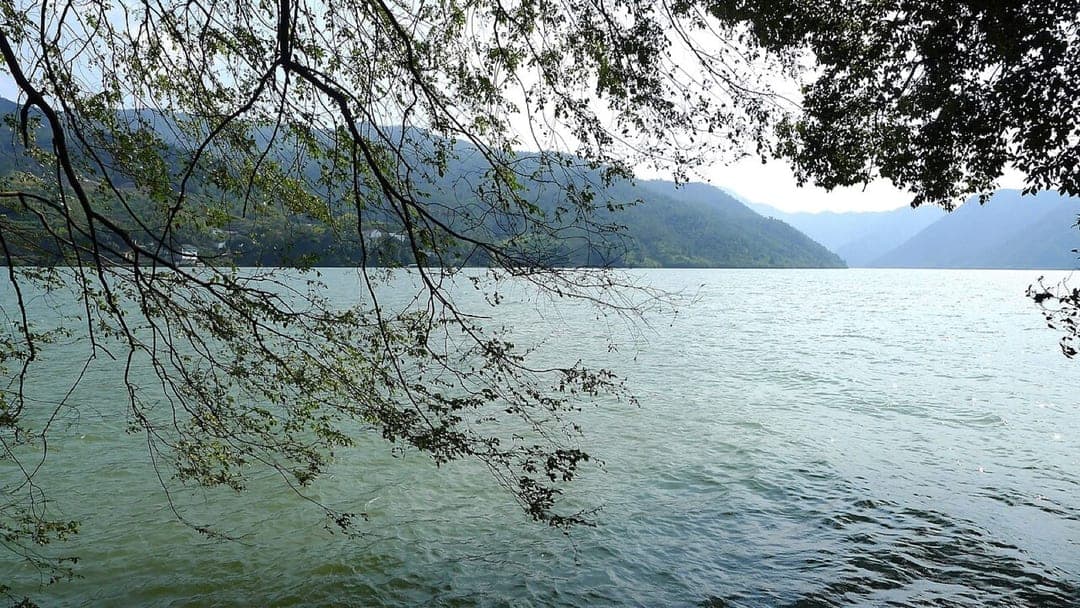
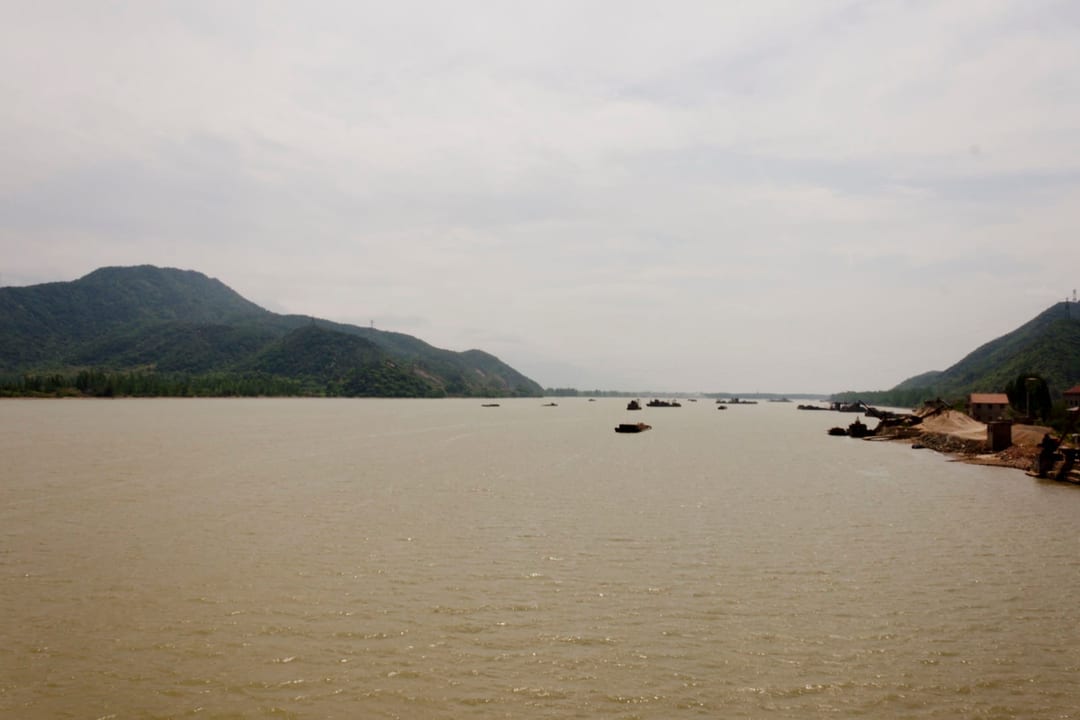
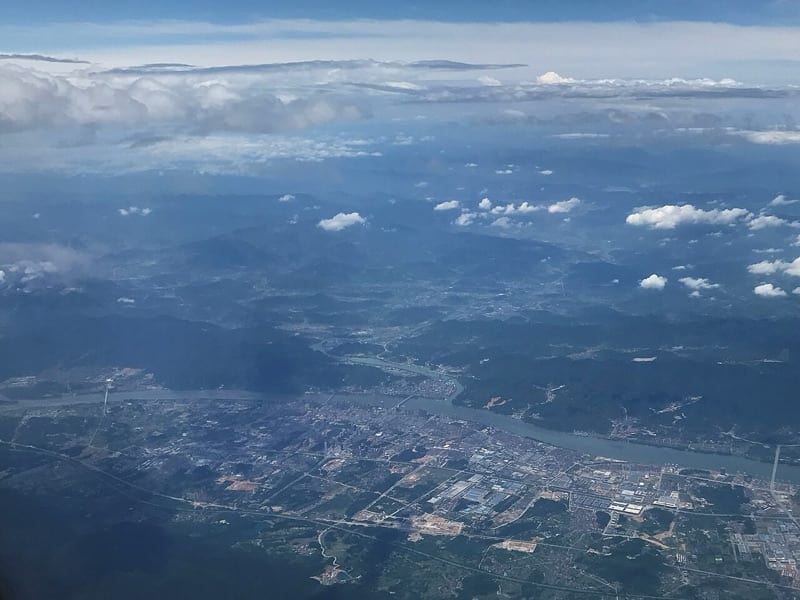
Key photo points along the route.

Practical Notes
The gate is free; the cart is not
Entry has been free since 31 May 2025, with no reservation, and that includes 小洞天 and the digital hall. The 观光车 is separately ticketed; no fare is printed here, because the posted price at the gate governs and the archive has no confirmed number.
The hours that decide the day
Summer runs 8:30–18:00 with last entry at 17:30; winter runs 8:30–17:00 with last entry at 16:30. The gate's closing time matters more than the weather, because the valley has no second exit and the return is the same 2.7 km.
One distance, one climb
The mapped line is 2.7 km one way and 5.4 km out and back. The climb is +240 m from 68 m at the gate to 286 m at 小洞天; the return re-descends it and does not add a second climb. The round figure in visitor guides is B and is not this page's measurement.
The show, and the painting
The memorial's 45 m × 3 m screen runs in half-hour slots; ask at the door for the day's times, because any fixed schedule online is B. The original 剩山图 is at the 浙江省博物馆, not in the valley, and it is shown for a few weeks a year. Check the museum's notice before planning around it.
Toilets and water
Use the block 13 m from the gate, then the one by the memorial, the one at 百竹园 and the one on the access road. After 百竹园 the last 1.6 km to 小洞天 has none. There is no shop or tap in the valley; carry a litre, and buy food at 圆缘园 before you start.
The access road and the last bus
The 黄公望森林公园南 stop is 1.6 km and about 25 minutes below the gate, and the 观光车 covers the same road for a separate fare. The 500路's last departure is not published, so do not build the day on an assumed evening bus. The metro runs until 22:30 on Line 4 and 23:00 on Line 6, and a taxi is the fallback.
The upper path, rain and ice
The path is stone steps through bamboo, wet after rain and glazed after a clear winter night. The upper section to 小洞天 and 南楼 has no mapped alternative and no confirmed all-weather status. Walk it in the morning if rain is forecast, and turn back rather than test the steps in the dark.
Where the scroll actually lives
剩山图 is in the 浙江省博物馆 in Hangzhou and 无用师卷 in the 台北故宫. The valley is the landscape the scroll describes, not its storeroom. Do not come expecting the original on the wall; come for the path, the memorial and the two museums that hold the halves.
Safety Notes
- The path is an out-and-back with no second exit; the return is the same 2,692 m, and the gate closes at 18:00 in summer and 17:00 in winter.
- Stone steps through bamboo are slick after rain and can hold ice after a clear winter night. The upper section has no mapped bypass.
- There is no shop, tap or toilet between 百竹园 and 小洞天; carry water and use the toilet at 百竹园.
- The 观光车 costs extra and no verified fare exists in this record; read the board at the gate before boarding.
- The 500路's last departure is not published; plan a taxi fallback and do not rely on an evening bus.
- Do not climb 如意尖 from this route: the gate-to-summit walk is 18,006 m, mostly on roads, and the summit is not part of this valley.
Frequently Asked Questions
Short answers to common planning questions about transport, Chinese place names, timing, and safety for this route.
-
Is the Huang Gongwang retreat free?
Yes, since 31 May 2025, with no reservation. The gate, the valley path, 小洞天 and the digital hall are free. The 观光车 needs its own ticket, and the gate board is the only fare that counts. Older guides still list a ticket price; the gate has not charged one since 31 May 2025, so any figure you see is historical or wrong. -
How do I reach it without a car?
Start on Line 4 at 杭州东站, switch to Line 6 at the 科海路 platform, and finish on the 500路 at the southern park stop. The whole trip measures 2 h 11 min for ¥10, and 1,757 m of it is walking. From 双浦 it is 1 h 03 min and ¥3; from 桂花西路, 1 h 16 min and ¥2; from 富阳站, 1 h 20 min and ¥4. The stop is 1.6 km below the gate. -
How long does the walk take?
Two to three hours at an easy pace, including the memorial but not a long lunch. The path is 2.7 km one way and 5.4 km out and back, with 240 m of climb. Allow two and a half to three and a half hours if you watch the film, read the halls and stop at 小洞天. The 1.6 km access walk each way is additional. -
Is it a loop?
No. The valley path is an out-and-back: you walk 2,692 m to 小洞天 and re-walk the same line to the gate. The forestry bureau's 6.5 km event route from 黄公望村广场 is a different shape and starts below the gate, and this page does not draw it. There is no loop version of the valley path. -
Is 《富春山居图》 here?
No. The scroll is split: 剩山图 is at the 浙江省博物馆 in Hangzhou and 无用师卷 at the 台北故宫. The halves were shown together in 2011 in Taiwan, and the Hangzhou half appears for a few weeks a year at the 之江馆. The valley is the landscape, not the painting's storage, and the original is not promised on any given day. -
Is the memorial worth the stop?
Yes, for the rebuild and the screen rather than for a collection. The 2012 building burned on 8 July 2024 and reopened on 31 May 2025; the 45 m × 3 m curved screen runs a short film in half-hour slots, with the day's times at the door. The three halls explain the painter and the scroll, and the building is the dry stop on a wet day. -
Where are the toilets?
Four are mapped: 13 m from the gate, by the memorial about 350 m along the path, at 百竹园 about 1.1 km in, and on the access road at 山居路1号, 895 m below the gate. A fifth is 264 m from the bus stop by the visitor centre. The last 1.6 km from 百竹园 to 小洞天 has none, so use the 百竹园 block. -
Where can I eat and drink?
At 圆缘园 by the gate: 浙湾里·公望主题餐厅 is 53 m away and 台福楼餐厅 72 m, and 伟创副食品商店 is 330 m. 左邻右舍 in the village is 922 m. Nothing in the valley sells food or water, so eat before you start and carry at least a litre for the upper 1.6 km. -
Can I climb 如意尖 from here?
Not as part of this walk. 如意尖 is the park's 536.9 m high point, and the gate-to-summit route measures 18,006 m and 14,405 s, with 2,840 m on 江滨东大道辅路 and 5,662 m on 高尔夫路. It is a road-heavy approach, not a valley extension, and 536.9 m is not this route's gain. -
What happens if I miss the last bus?
The 500路's last departure from 黄公望森林公园南 is not published, and an empty platform field is not a promise of all-day service. If the stop looks finished, take a taxi; the metro runs until 22:30 on Line 4 and 23:00 on Line 6. Build the day around the gate's 18:00 summer or 17:00 winter closing, not the bus timetable's silence.
Nearby Routes
Other trails starting from the same area, worth combining or visiting on another day.
Longmen Ancient Town
The other Fuyang day: a flat half-day through the largest settlement of Sun Quan's descendants, with Ming-Qing halls and a stream through the middle.
Maling Ancient Path, Tonglu
The Fuchun upstream, where the river the scroll describes runs through a village and an old path.
Hupao Valley Walk
The nearest stream-valley analogue in Hangzhou: a spring, a monastery park and 209 m of stone steps to a ridge pavilion.
Nine Creeks and Yunqi
A longer stream valley on the other side of the West Lake hills, ending on the bamboo path of 云栖竹径.