Jingshan
径山
A tea-and-bamboo township in western Yuhang, 35 km from the city, whose two walks could not be more different: a signposted provincial demonstration loop that starts at the zero marker of Zhejiang's long-distance network, and a stone pilgrim path up to the Zen temple that gave Japan its tea. Both begin in the same valley at Shuangxi, and both are governed by an early last bus.
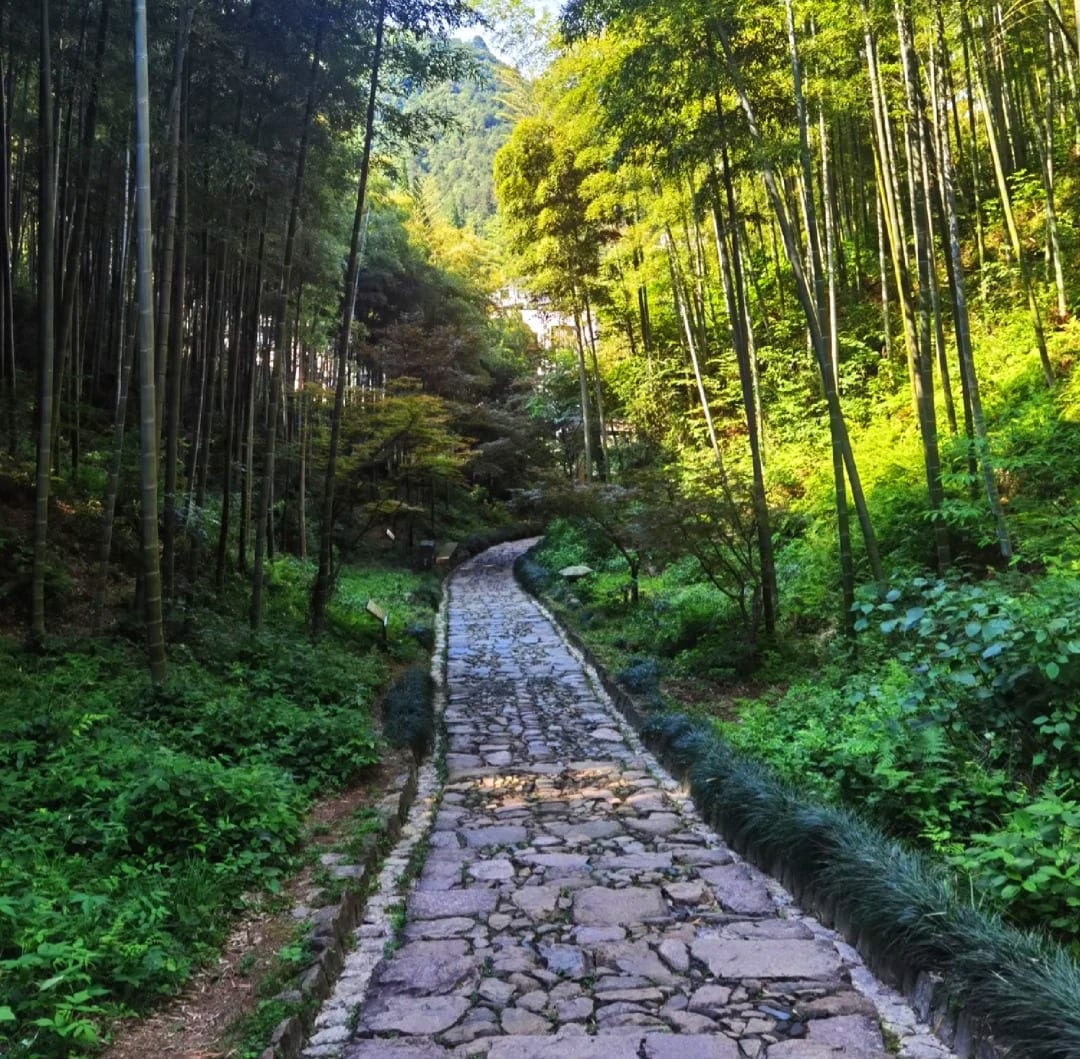
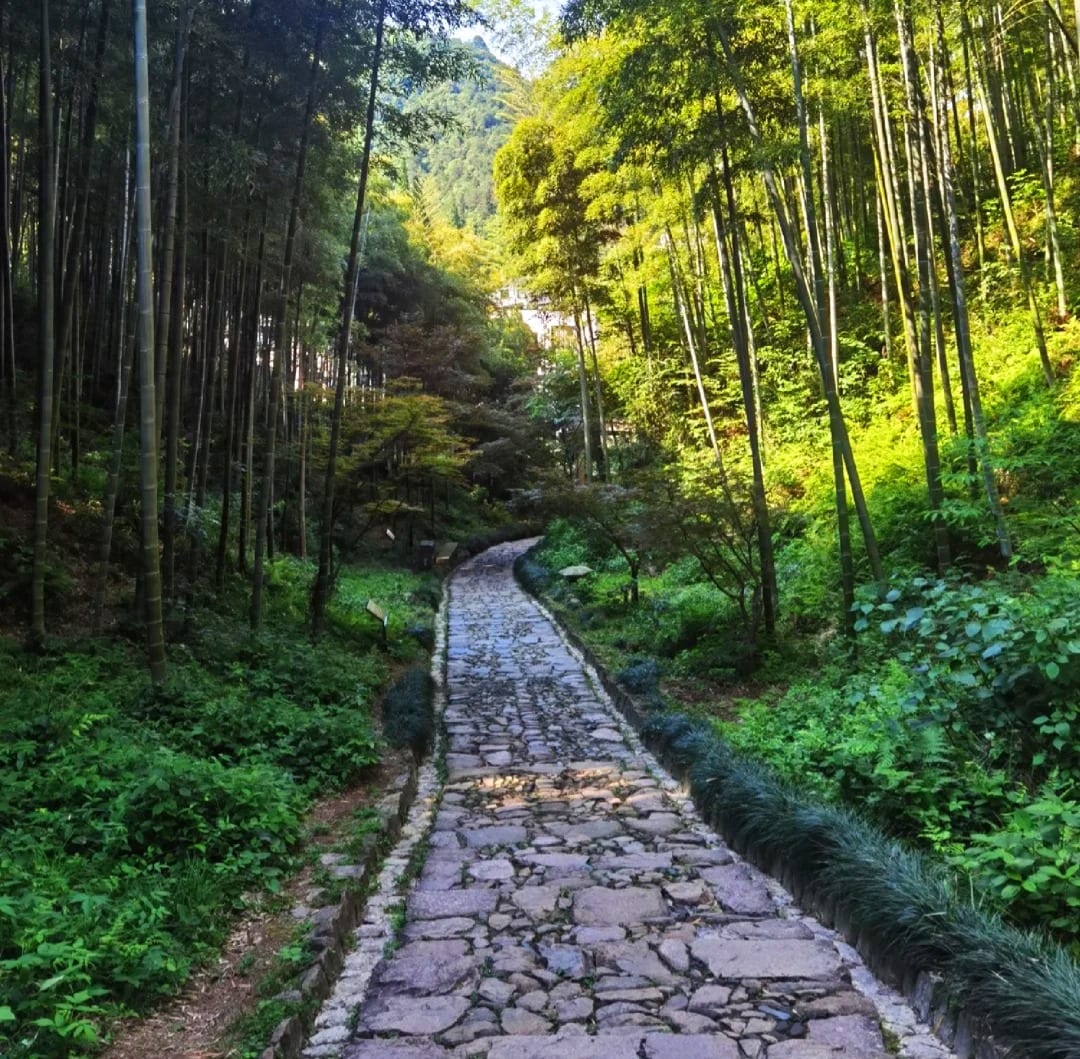
Jingshan Town (径山镇) sits in the hills west of Hangzhou, in Yuhang District, and it holds two quite different claims on a walker's attention. The first is modern: it is where the Huanzhe Trail, Zhejiang's provincial long-distance network, has its zero marker and western starting point, on the plaza at the Dajingshan tourist hub by the twin streams at Shuangxi. A short demonstration loop was built out from that post and opened in April 2022 to a minimum-intervention standard, with a unified sign system and waymarkers that carry route data. The second claim is several centuries older. Jingshan Temple, founded in 742, was one of the great Chan monasteries of the south and the place from which tea preparation travelled to Japan with the monks who studied here, which is why the terraces below the ridge are as famous as the hills. The two walks that carry these claims start in the same valley and end five and a half kilometres apart: the loop climbs the catchment above the hub, while the pilgrim path leaves from Tongqiao to the west. Getting back to Hangzhou is the real constraint, because most direct buses run only at weekends and the country route out of the valley stops early in the afternoon.